| Author : Prashant S.
Iyengar |
| Prashant
Uvacha |
Class
After Class |
| Yoga
and the New Millenium |
Alpha
and Omega of Trikonasana |
| Organology and sensology in Yogash_stra (new) |
| |
| For more information contact:info@rimyi.org or yog@bksiyengar.com |
|
|
Organology and sensology in Yogashāstra :
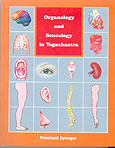
This is an English translation of Sri Prashantji's original Marathi book. This pocket sized book opens up a whole new dimension on our understandng on how the organs and senses work. It gives us a very interesting combination of modern, physiological perspective on the organs and senses and the yogic understanding of the same. The general understanding is that the senses of the eyes are for seeing, ears for hearing, skin for feeling and nose for smelling.
This book explains how the functioning of the senses in not just mechanical like the eyes beings like cameras or the ears like a tape-recorder and how these senses are affected by the our mind, intelligence and emotions.
It explains how the organs have their ‘own mind’ and how they are influenced by the emotions. For example, the heart beat rises with physical exercise and so also with fear.
A book which will open up our horizons and the way we ‘look’ at our organs and senses. Ultimately it would naturally influence the way we practice our āsana-s and prāņāyama as these in turn influence and are influenced by our organs and senses!
This book is published by RIMYI and YOG.
Class after Class :
Available in - English
This booklet is a transcript of an interview of Prashant
S. Iyengar. The interview
covers various aspects of Iyengar Yoga practices.
It articulates the unique features of Iyengar Yoga practices such
as the sequencing of asanas, the importance given to timings and
the technical intricacies. It explains clearly as to
how the mind is involved in one’s practice and
it guides one in one’s practice through various stages
and ages of life. A book which would be serve as a revelation
for the "Iyengar Yoga" practitioners.
Yoga and the New Millenium
:
Available in - English.
A new revised, edited and illustrated version of this book
was released on Patanjali Jayanti 2004. It is a transcript of
the talks given by Sri Prashant S Iyengar on topics such as our
system, karmascopy, dietetics, dreams and time.
Therapeutics and karmascopy, Dietetics and Dreams highlight how
our approach and understanding of diseases, food and dreams is
narrow and restrictive today.
Mentology deals with the psychology of the mind, a subject totally
unknown today while Time is a pragmatic interpretation of the
philosopher's favourite piece of advice to live in the present!
A book, which opens out new horizons on subjects close to human
existence.
Prashant Uvacha :

This book is a transcript of the Tuesday evening classes taught
by Sri Prashant Iyengar in 2002-2003. It includes sequences of
the asanas and his instructions while teaching the different asanas
and pranayama. It also includes his analogies from day to day
life and his quotations. Audio CDs for specific classes are also
available.
Alpha and Omega of Trikonasana
:
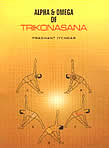 Trikonasana has been used as an example to explain how asana practice
is a journey from external beginnings to the knowledge of the ‘soulosphere’.
The process of involution from the external geometry to the inner
purport of Trikonasana is beautifully described. Most practitioners
misunderstand the purport of the yogasanas as ‘doing the pose’.
‘Doing’, Prashantji explains, must include alerting,
activating, sensitizing, perceiving and becoming pensive and reflective
in a pose. These are all modes of ‘Doing’. He clearly
explains that Yoga is a heuristic subject where ‘one learns
from oneself and one teaches oneself’. This requires a keen
observation of the interplay of the three major players in the asana
practice – body, mind and breath.
Trikonasana has been used as an example to explain how asana practice
is a journey from external beginnings to the knowledge of the ‘soulosphere’.
The process of involution from the external geometry to the inner
purport of Trikonasana is beautifully described. Most practitioners
misunderstand the purport of the yogasanas as ‘doing the pose’.
‘Doing’, Prashantji explains, must include alerting,
activating, sensitizing, perceiving and becoming pensive and reflective
in a pose. These are all modes of ‘Doing’. He clearly
explains that Yoga is a heuristic subject where ‘one learns
from oneself and one teaches oneself’. This requires a keen
observation of the interplay of the three major players in the asana
practice – body, mind and breath.
|
|
|